Lime plaster in an Irish period home: repair, and decision
Most people arrive at lime plaster because something has gone wrong. Damp on a chimney breast. Paint lifting off a hall wall for the third time. A surveyor's report that used the word breathable and did not explain it.
So here is the short version.
If your house was built before roughly 1920, its walls are almost certainly solid stone or solid brick, with no cavity and no damp-proof course. Those walls were built to get wet and then dry out. Lime plaster and lime mortar let moisture pass through and evaporate. Cement render and modern gypsum do not. Seal a wall like that with cement and the water still gets in. It has nowhere to go, so it moves sideways and appears somewhere else, usually low down or through your paint.
That is the whole argument. The rest is detail.
Lime as repair
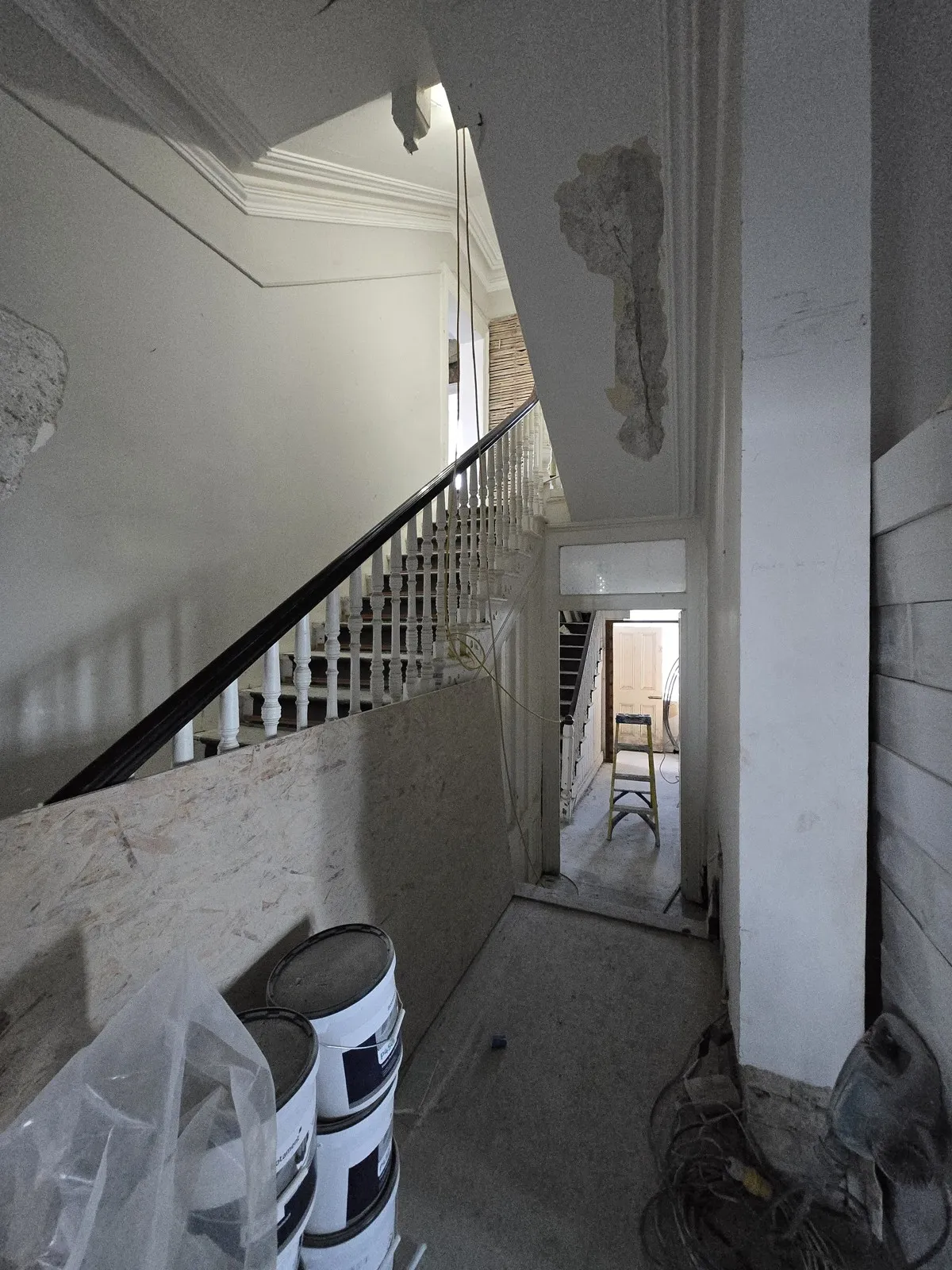
The hall above is in a protected period house we are working on now. The walls were stripped back to establish what was there, and what previous owners had done to it. The answer was lime underneath, cement and gypsum patches over the top, and a slow failure at every point where the two met.
It went back in lime plaster, finished in lime paint. Not for the look. Because anything else would have failed again.
Lime goes on in coats, and each one has to carbonate before the next. That takes weeks, not days, and it is weather-dependent. In an Irish October it takes longer than in an Irish June. Build that into the programme at the start or it will take the time from somewhere else.
You also cannot paint it with standard emulsion. It needs lime paint, limewash, or a mineral or clay-based paint, or you have sealed in the breathability you paid for.
Cost sits well above gypsum. Rates start around €200 per square metre for materials and trade, and move from there with the level of preparation the wall needs and any bespoke finish. Ask any quote to be broken into preparation, coats and finish, because that is where the variation sits.
The gap on price is labour and time rather than material.
Lime as decision
The second use has nothing to do with damp.
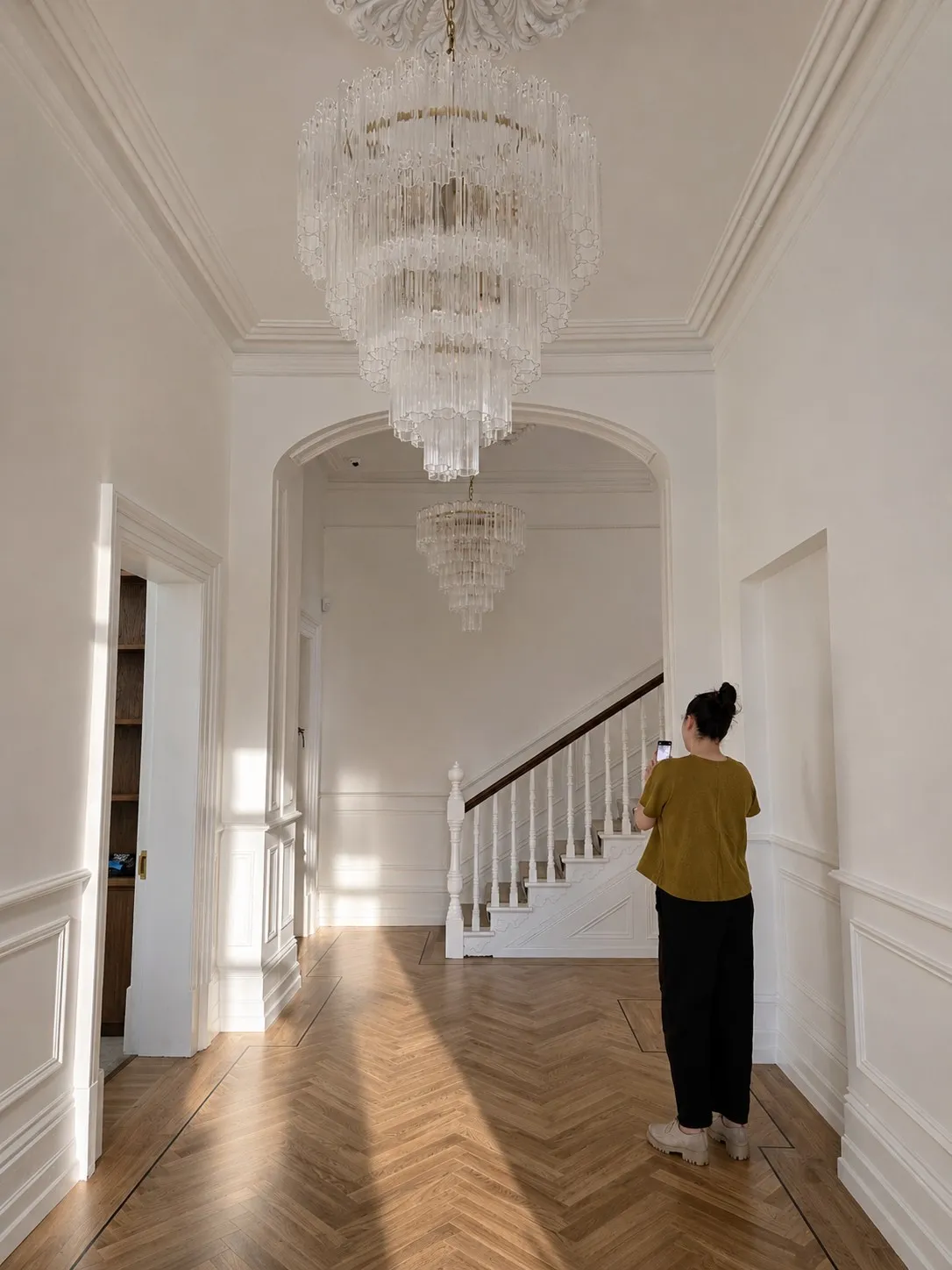
In The Ochre House the walls are sound and modern in build. Lime plaster went on because of what it does to light. A lime surface is not flat. It holds a slight movement across its face, and that movement changes through the day. In a north-facing room it reads soft and chalky. In direct afternoon sun it shows every undulation.
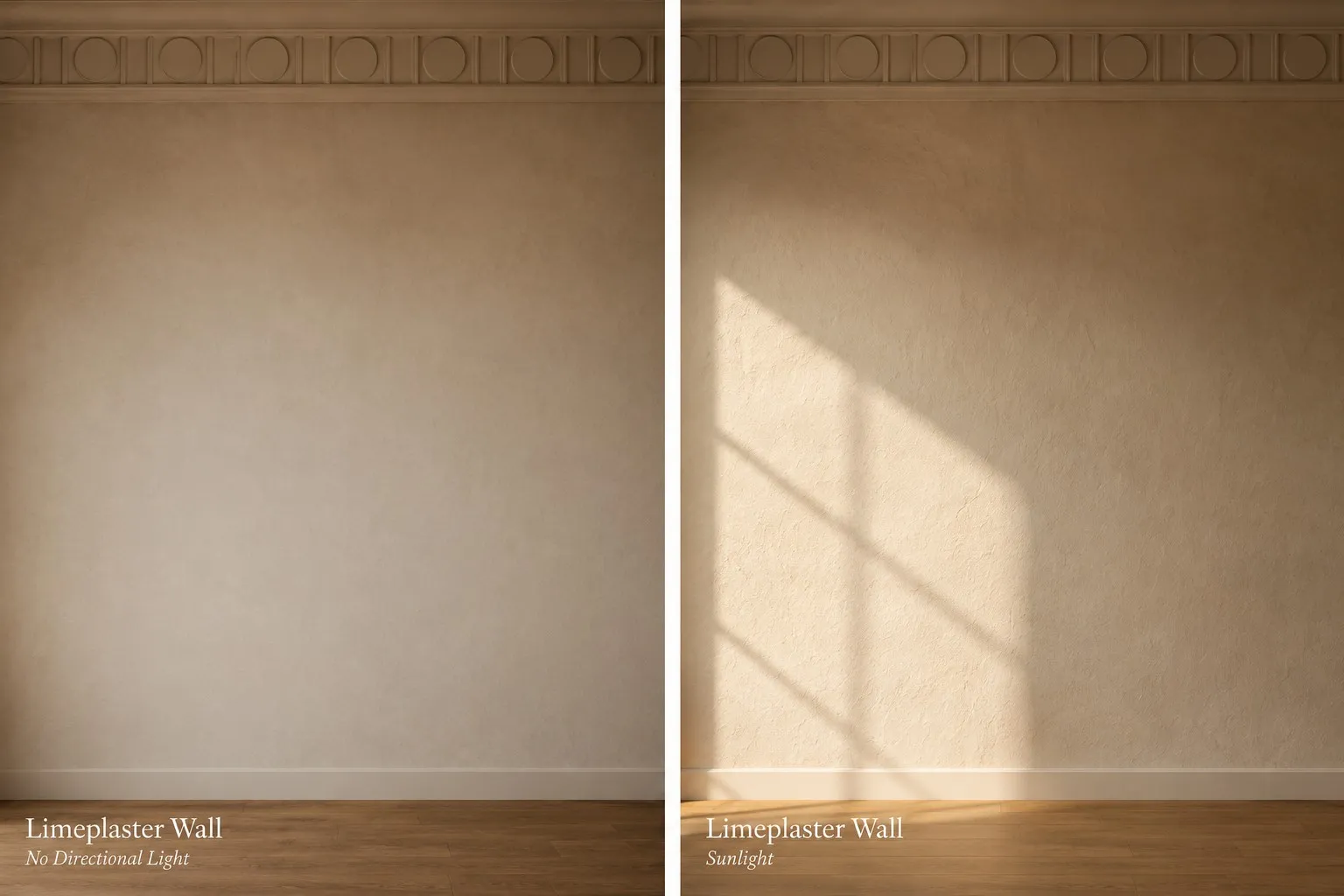
Some people see depth in that. Some people see an uneven wall. It is worth knowing which one you are before you commit, because it does not change after installation.
Where we would not use it
A new-build extension on a period house.
This comes up constantly. The old part needs lime. The new part is blockwork with insulation and a cavity, and it does not. Putting lime on a modern wall for visual consistency buys a performance you do not need and a finish that marks more easily than the alternative.
We would also avoid it in a family bathroom with poor ventilation, and behind a run of fitted units where nobody will see it.
Lime is a repair strategy for old walls and a finish decision for visible ones. It is not a moral position about materials.
The trade-off
Lime is softer than gypsum. It scuffs. A chair back against a hall wall will leave a mark, and children will find it faster than you will.
It also repairs invisibly, which gypsum does not. A patch can be feathered in and, once settled, disappears. Gypsum patches show forever.
If you want a wall that stays pristine without thought, this is the wrong material.
Before you commit
What is the wall made of. If nobody has established whether it is solid stone, solid brick or a later cavity build, that comes before any decision about finish.
What has already been done to it. Cement render on the outside face will keep the wall wet regardless of what goes on the inside. Lime over that solves nothing.